IFECARM GROUP — QHSE Risk Management
Safety signage

Safety pictograms, a universal visual language

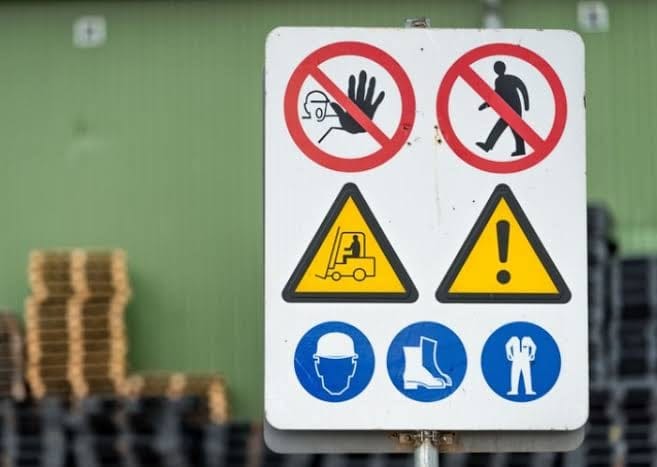
The ISO 7010 standard harmonises safety signage worldwide: a shape and a colour immediately identify the nature of the message, regardless of language.

Why it matters

A colour code and a shape, not a sentence to read

On a construction site, an industrial facility or a public-access building, a sign must be understood in a split second, even by someone who does not read the local language. The ISO 7010 standard meets this need by fixing, for each family of message, a shape and a colour that never change: red and a barred circle for a prohibition, yellow and a triangle for a warning, blue and a circle for an obligation, green for emergency information, red and a square for fire-fighting equipment. Consistent, well-positioned and regularly checked signage is one of the baseline requirements of any QHSE prevention approach. Not to be confused with the chemical hazard pictograms of the Globally Harmonised System (GHS/CLP): these fall under a separate standard, dedicated to product labelling and safety data sheets rather than on-site signage.

The 6 families

The families of standardised pictograms

Prohibition signs

ISO 7010

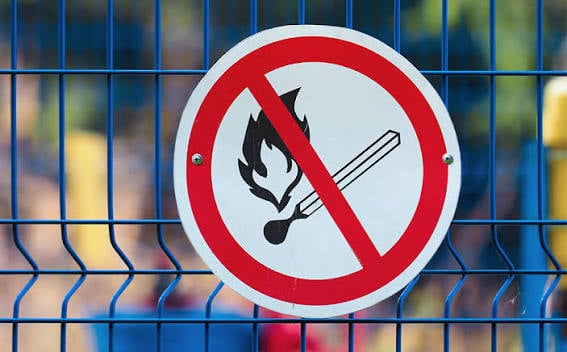
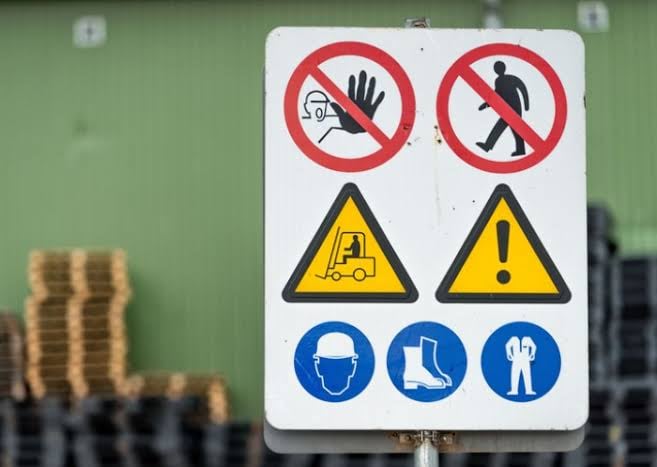
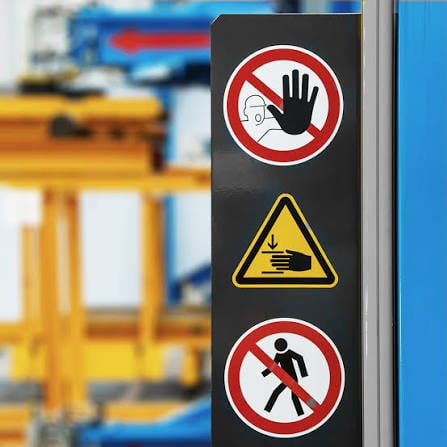
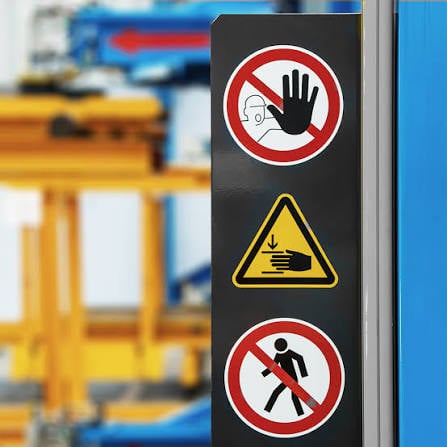
Red circle, white background, black pictogram crossed by a diagonal bar. They signal behaviour that is formally forbidden because ignoring it creates a direct danger.

Common examples
  • No smoking
  • Mobile phones forbidden
  • No access for unauthorised persons
  • No open flame
Prohibition signs 1Prohibition signs 2

Warning signs

ISO 7010

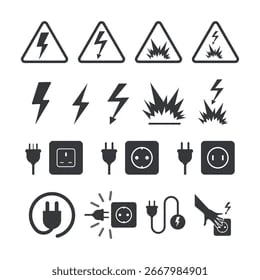
Yellow triangle with a black border, black pictogram. They signal a specific hazard or risk present in the area, without forbidding or requiring a particular action.

Common examples
  • Electrical hazard
  • Chemical hazard
  • Flammable material
  • Slip / trip hazard
Warning signs 1Warning signs 2

Mandatory signs

ISO 7010

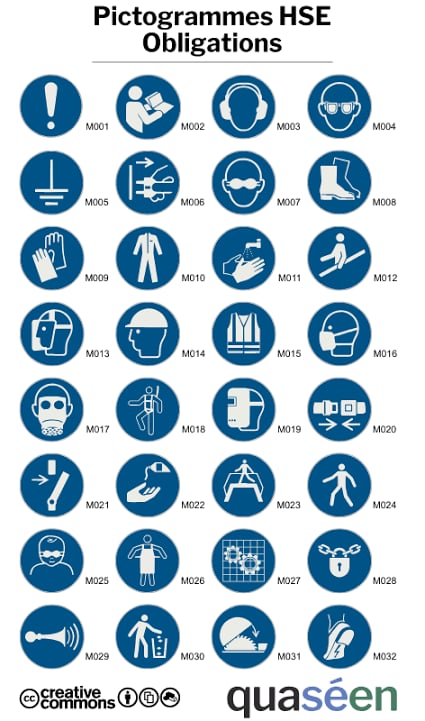
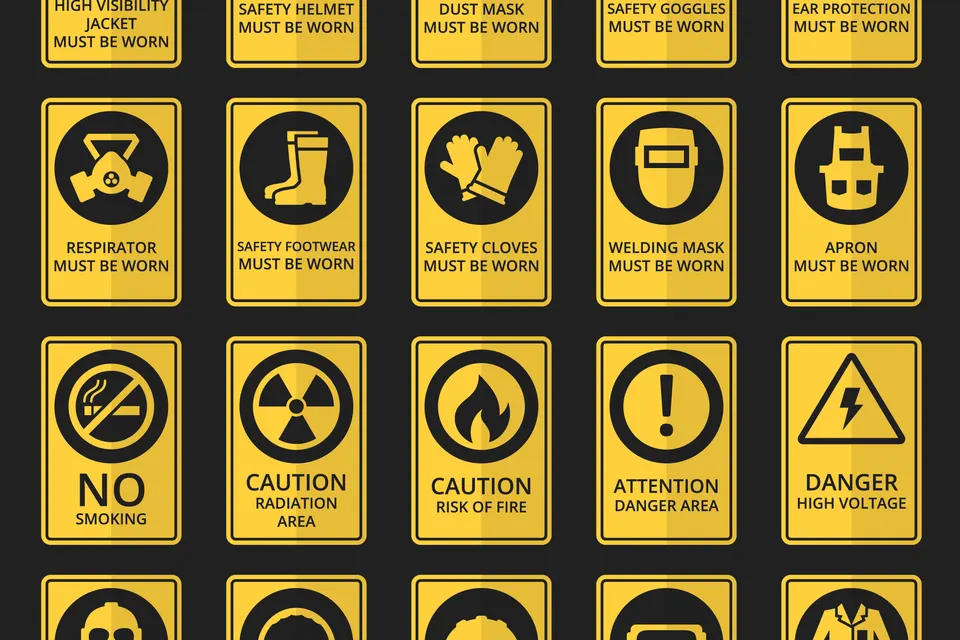
Blue circle, white pictogram. They require a specific action or the wearing of personal protective equipment before entering the area or carrying out a task.

Common examples
  • Helmet must be worn
  • Hearing protection must be worn
  • Gloves must be worn
  • Safety footwear must be worn
Mandatory signs 1Mandatory signs 2

Emergency and escape signs

ISO 7010

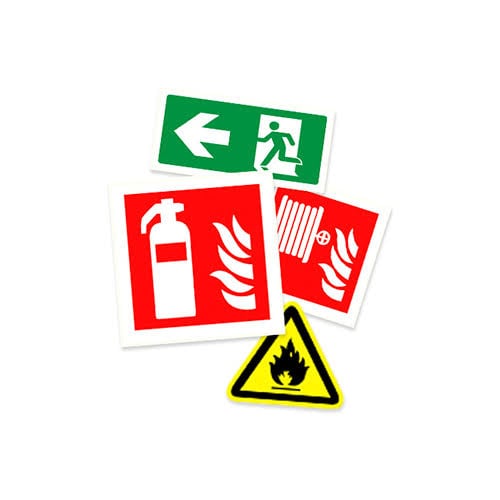
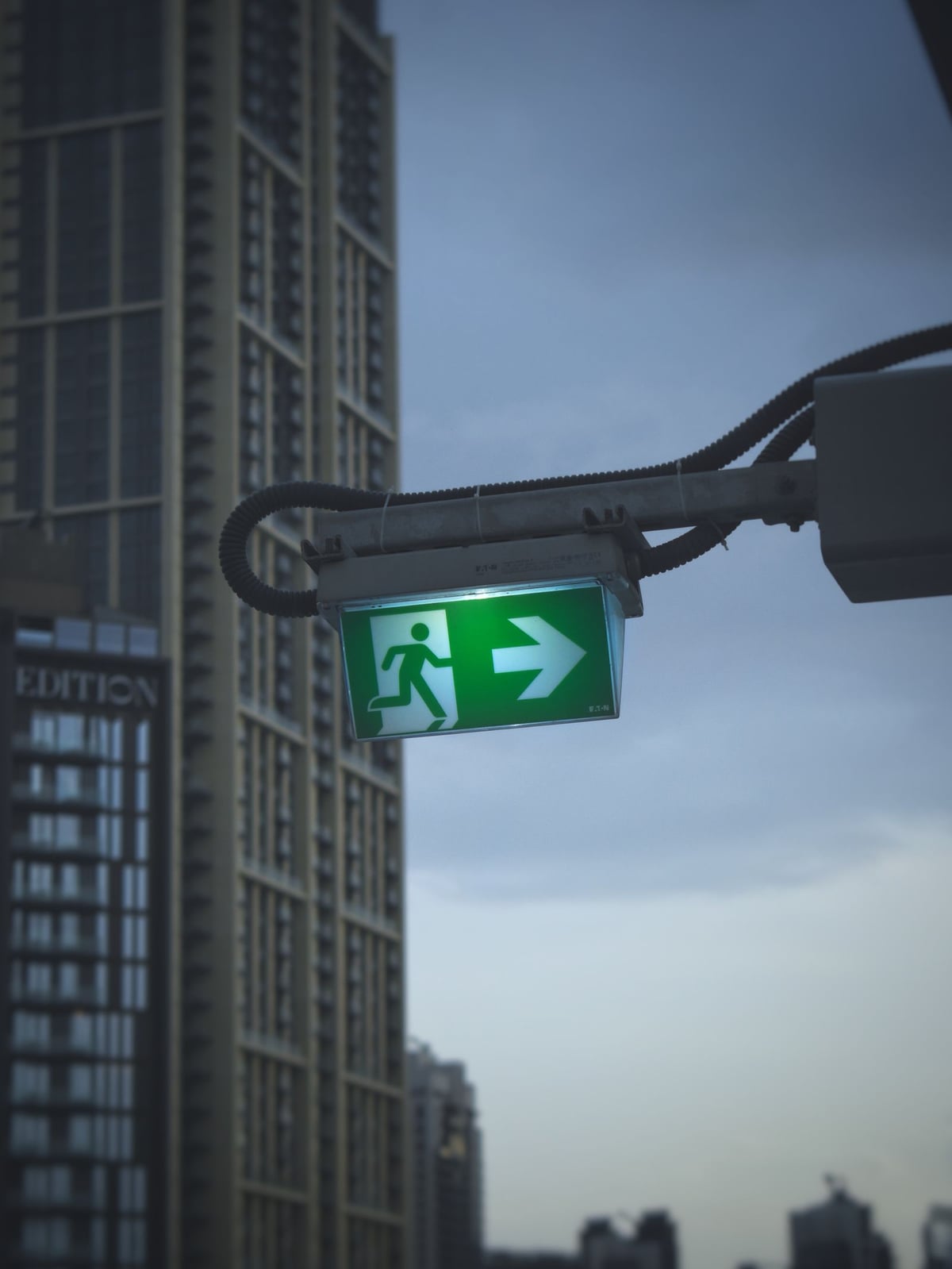
Green square or rectangle, white pictogram. They indicate emergency exits, escape routes and first-aid resources available on site.

Common examples
  • Emergency exit
  • Assembly point
  • First-aid station
  • Safety shower / eyewash station
Emergency and escape signs 1Emergency and escape signs 2

Fire-fighting equipment signs

ISO 7010

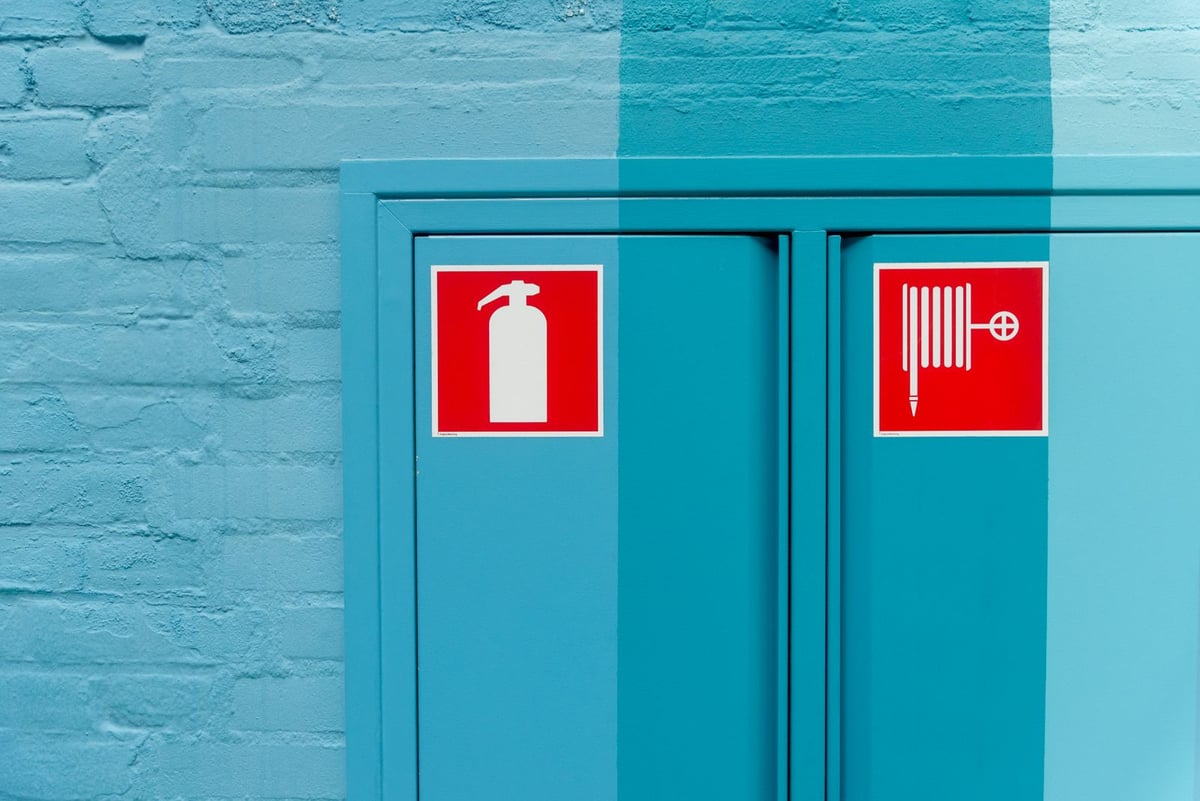
Red square or rectangle, white pictogram. They precisely locate fire-fighting equipment available for rapid intervention.

Common examples
  • Fire extinguisher
  • Fire hose reel
  • Fire alarm call point
  • Direction to follow in case of fire
Fire-fighting equipment signs 1Fire-fighting equipment signs 2

Chemical hazard pictograms (GHS/CLP)

SGH / Règlement CLP (CE) n° 1272/2008

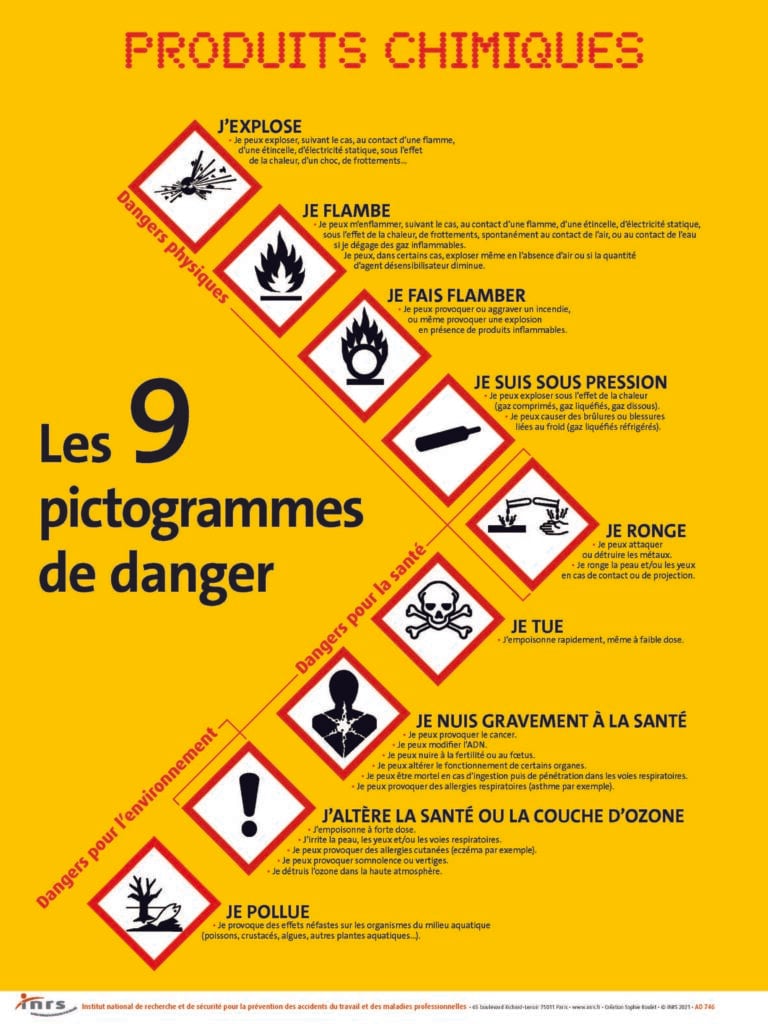
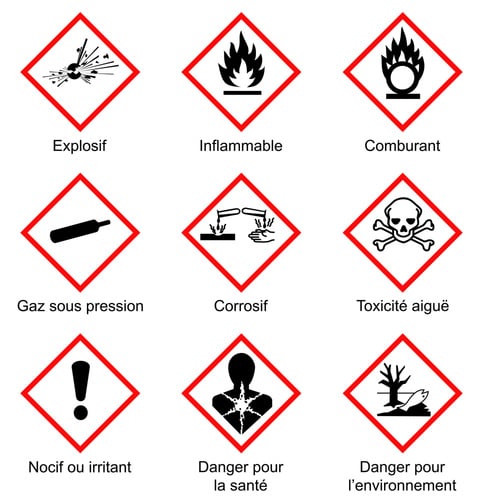
White diamond with a red border, black pictogram. These are the 9 pictograms of the Globally Harmonised System (GHS), used to label hazardous chemical products — a standard distinct from ISO 7010, which governs packaging and safety data sheets rather than on-site signage.

Common examples
  • Explosive
  • Flammable
  • Corrosive
  • Acute toxicity
  • Health hazard
  • Environmental hazard
Chemical hazard pictograms (GHS/CLP) 1Chemical hazard pictograms (GHS/CLP) 2
Regulatory and standards guidance

Requirements to check for your context

A responsibility to assess in context

In France, the employer provides health and safety signage when risks cannot be avoided or sufficiently reduced by other measures. In Benin and any other country, applicable requirements must be checked according to the site, activity and local regulations.

ISO 7010 and applicable rules

ISO 7010 defines safety signs for accident prevention, fire protection, hazard information and emergency evacuation. Its use should be coordinated with ISO 3864 principles and applicable national or sector-specific rules.

Reassess after every change

Adding machinery, creating a storage area or changing traffic routes may alter risks. The relevance, position and legibility of signage should then be reassessed.

Maintain a signage inventory

As a good practice, an inventory may record each sign’s location, installation date, condition and latest check to support internal monitoring.

Choosing the right material

Which material for which use?

The choice depends on the environment, installation surface, site constraints and required durability.

Examples of signs reminding workers to wear personal protective equipment

Rigid PVC

Rigid PVC may suit some indoor uses. Its fire behaviour and compatibility with the exposure environment should be checked before selection.

Indicative use

Compatible indoor uses after assessment

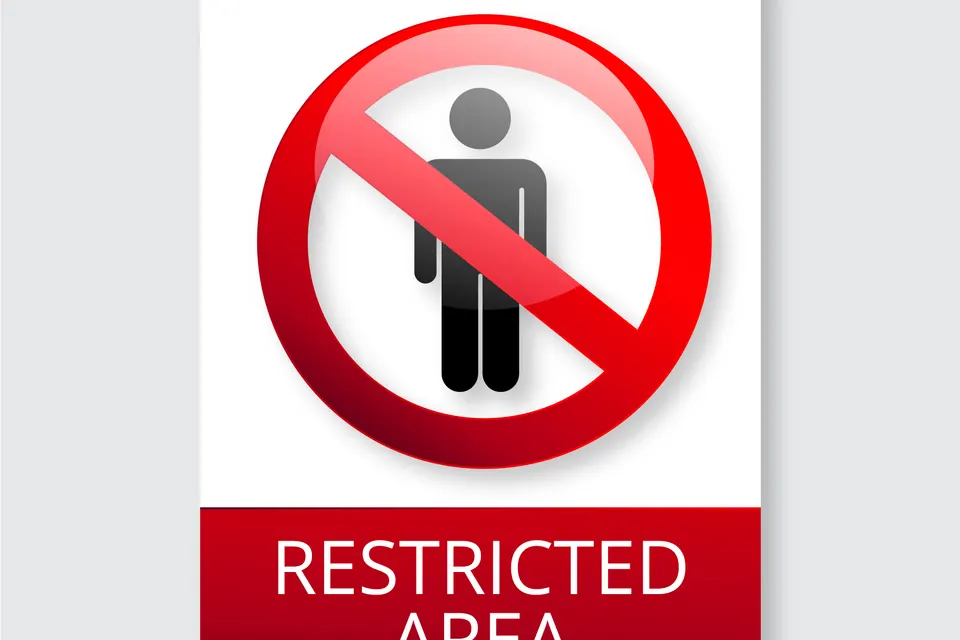
Illustration of a restricted-area sign

Aluminium / composite

Aluminium or composite may suit outdoor use when the coating, fixing and substrate withstand UV exposure, corrosion and site conditions.

Indicative use

Outdoor and demanding environments, subject to specification

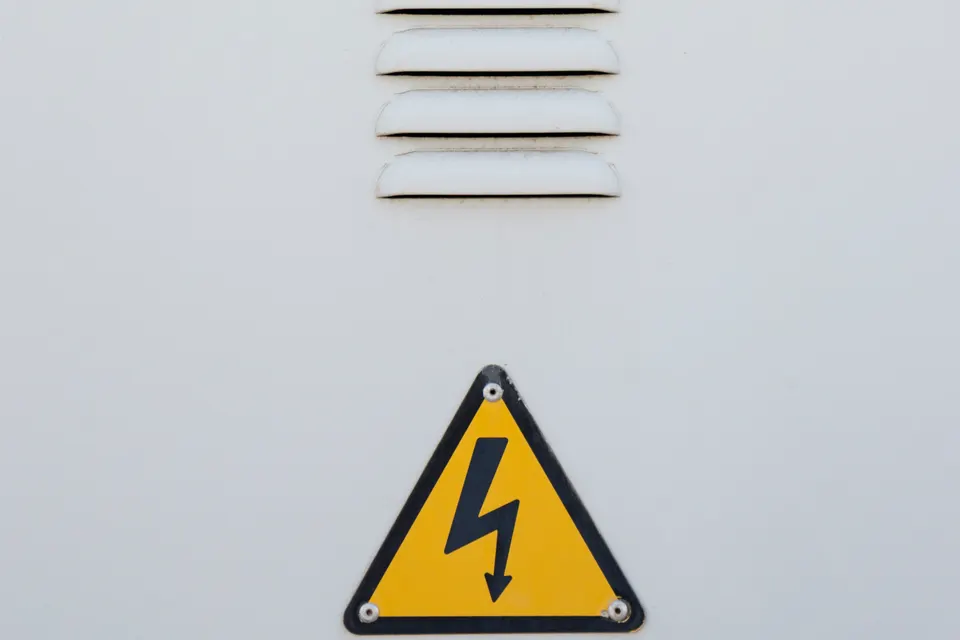
Electrical hazard pictogram fixed to an enclosure

Self-adhesive vinyl

Vinyl may be installed without drilling when the surface, adhesive, temperature and chemical exposure are compatible with the intended use.

Indicative use

Prepared, compatible surfaces

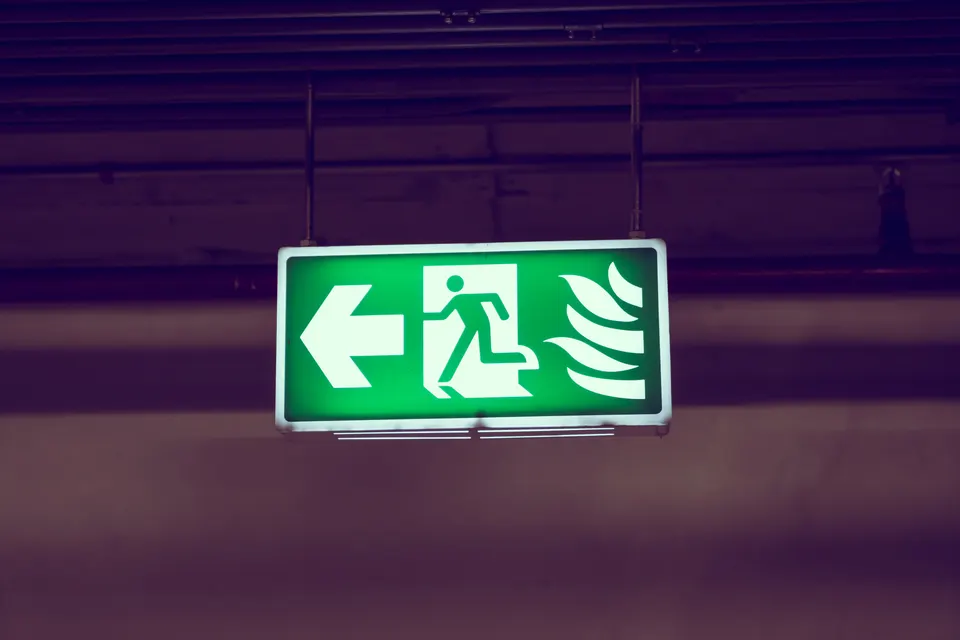
Illuminated emergency-exit sign pointing left

Photoluminescent

Photoluminescent signage may supplement wayfinding in low light. It does not replace emergency lighting or any other system required by applicable regulations.

Indicative use

Routes and equipment after site assessment

Frequently asked questions

Your questions about safety signage

Who is responsible for safety signage?

Responsibility depends on the country, the establishment’s status and identified risks. In France, it notably falls to the employer as part of their prevention duties. In Benin or another country, applicable rules and site responsibilities must be checked.

Can custom signage be considered?

A custom solution may be considered after assessing the site, the intended message and applicable standards. Customisation must not impair understanding of standardised safety signs.

Is an evacuation plan mandatory?

The need for an evacuation plan, its content and its location depend on the country, establishment type, occupancy and risks. It should be designed from the site’s actual layout and remain consistent with instructions, escape routes and emergency equipment.

How often should signage be checked?

There is no universal interval suitable for every site. Check frequency should reflect applicable requirements, risks, the environment and possible deterioration, with reassessment after any change to the site or activity.

Need compliant signage on your site?

We support the selection, design and deployment of signage suited to your site, risks and applicable requirements.

See our Innovation & Visual Design service

Need standard signs?

Browse the QHSE shop
(+229) 01 91 32 24 70